STATE 011 / 4 ACTIVE
Bleed fully openDedicated bleed airflow supplies most of the configured minimum flow.
Ecogate coordinates extraction at active pharmaceutical process points, maintains engineer-defined transport airflow and adjusts fan operation as production demand changes.
Keep inactive points closed, reduce unnecessary removal of conditioned room air and give facility teams greater visibility into extraction-system operation.
Pharmaceutical facilities often need localized extraction while maintaining room-pressure requirements and limiting unnecessary loss of conditioned air. Leaving every extraction point open can exhaust more conditioned air than active processes require, increasing make-up-air demand. Closing inactive points without coordinated airflow control can allow duct transport airflow to fall below the engineered requirement.
Current Adelie-generation systems using the greenBOX natively support Precision Airflow Gates as adjustable bleed gates. These gates can draw air from an appropriate plenum or technical space rather than an occupied production room, helping maintain the required duct airflow without unnecessarily exhausting conditioned room air.
As more process points become active, the bleed opening can decrease. When fewer points are active, it can increase. Reducing unnecessary exhaust can lower conditioned make-up-air demand and may reduce fan and HVAC loads. Actual savings depend on fan size, operating hours, process utilization, climate, utility rates and the engineered system configuration.
Precision Airflow Gates provide variable-position control in 1% increments. They can be used for dedicated bleed airflow or applications regulated from measured pressure, air velocity, air volume or temperature.
Smart and Precision Airflow Gate Actuators use 24V DC electric gear motors and Modbus daisy-chain wiring, eliminating the compressed-air infrastructure required by pneumatic gate actuators.
Ecogate connects process demand, gate position, measured airflow, dedicated bleed control and fan response. Each system is configured around the design airflow assigned to its process points and duct zones.
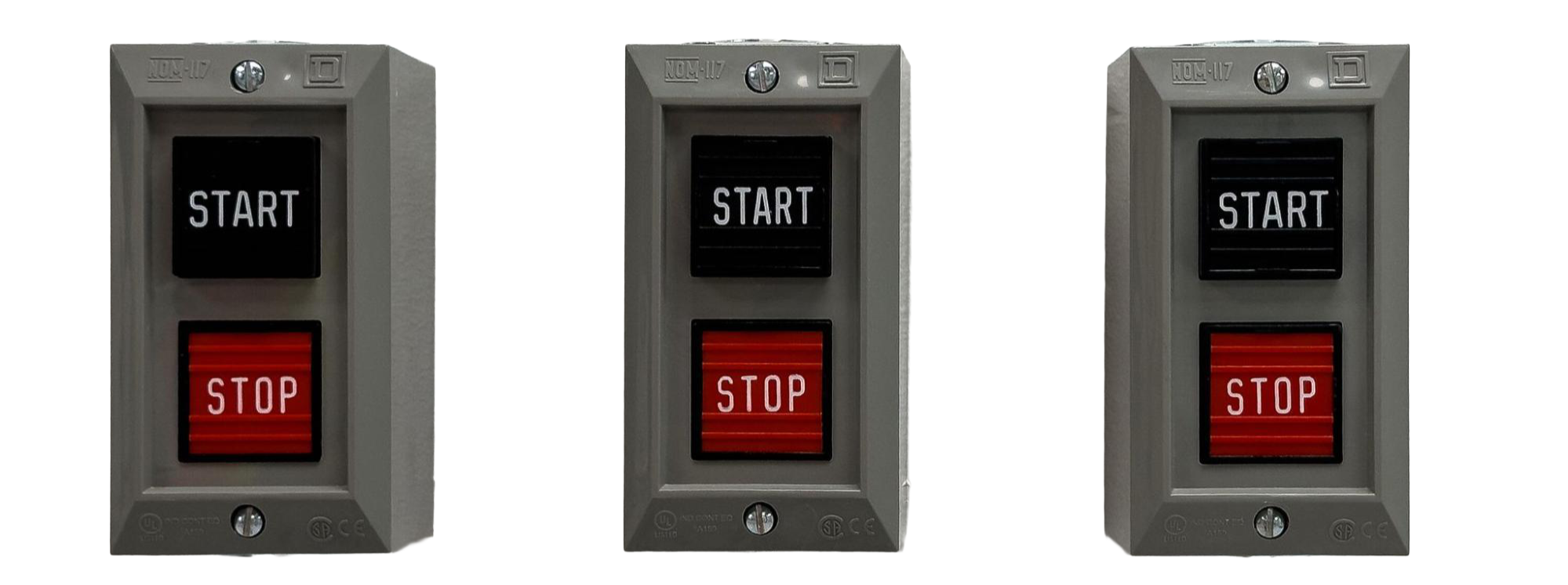
A machine signal, process input, sensor or local wall switch calls for extraction.
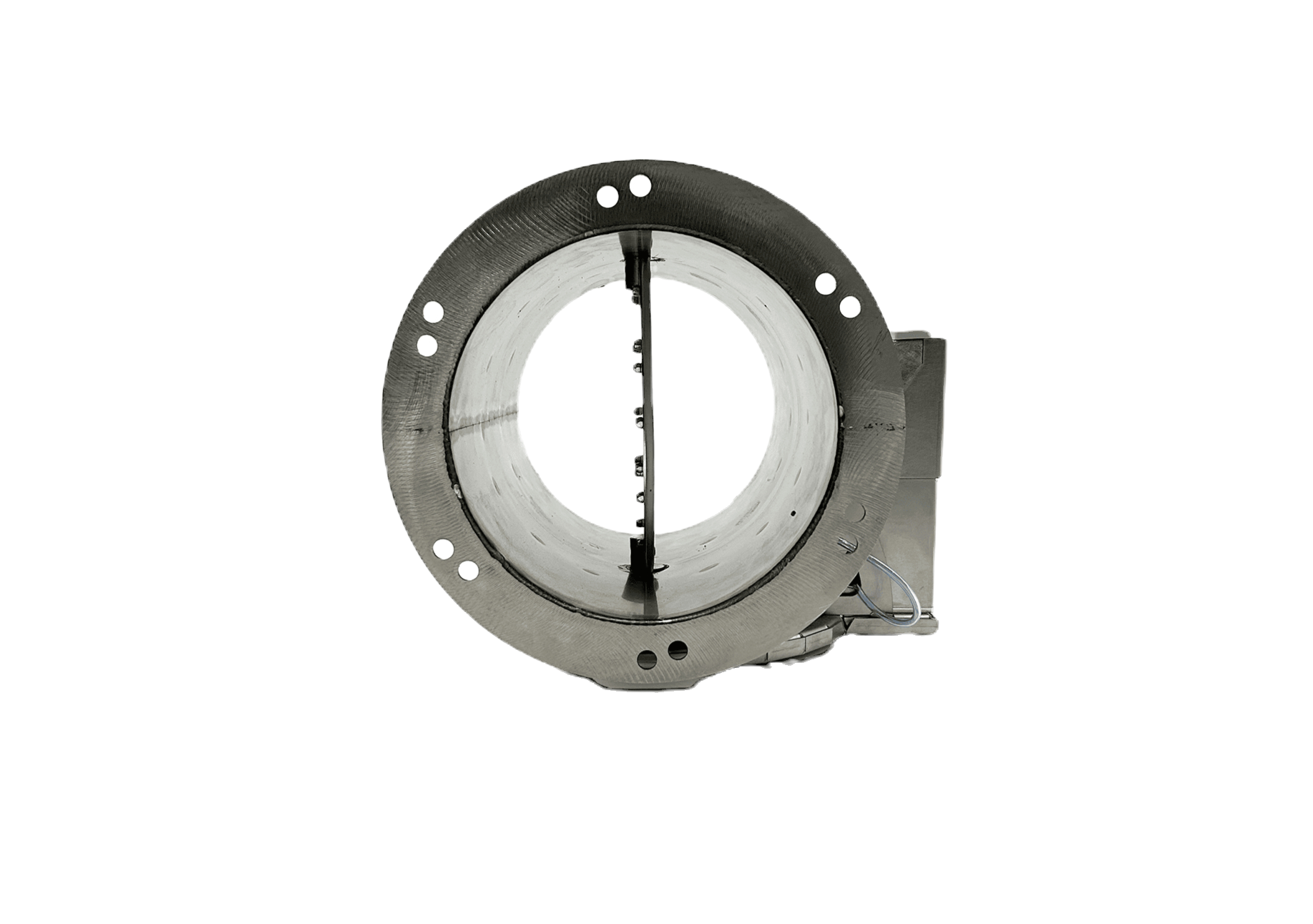
The assigned Smart Gate opens and confirms its open or closed operating state.
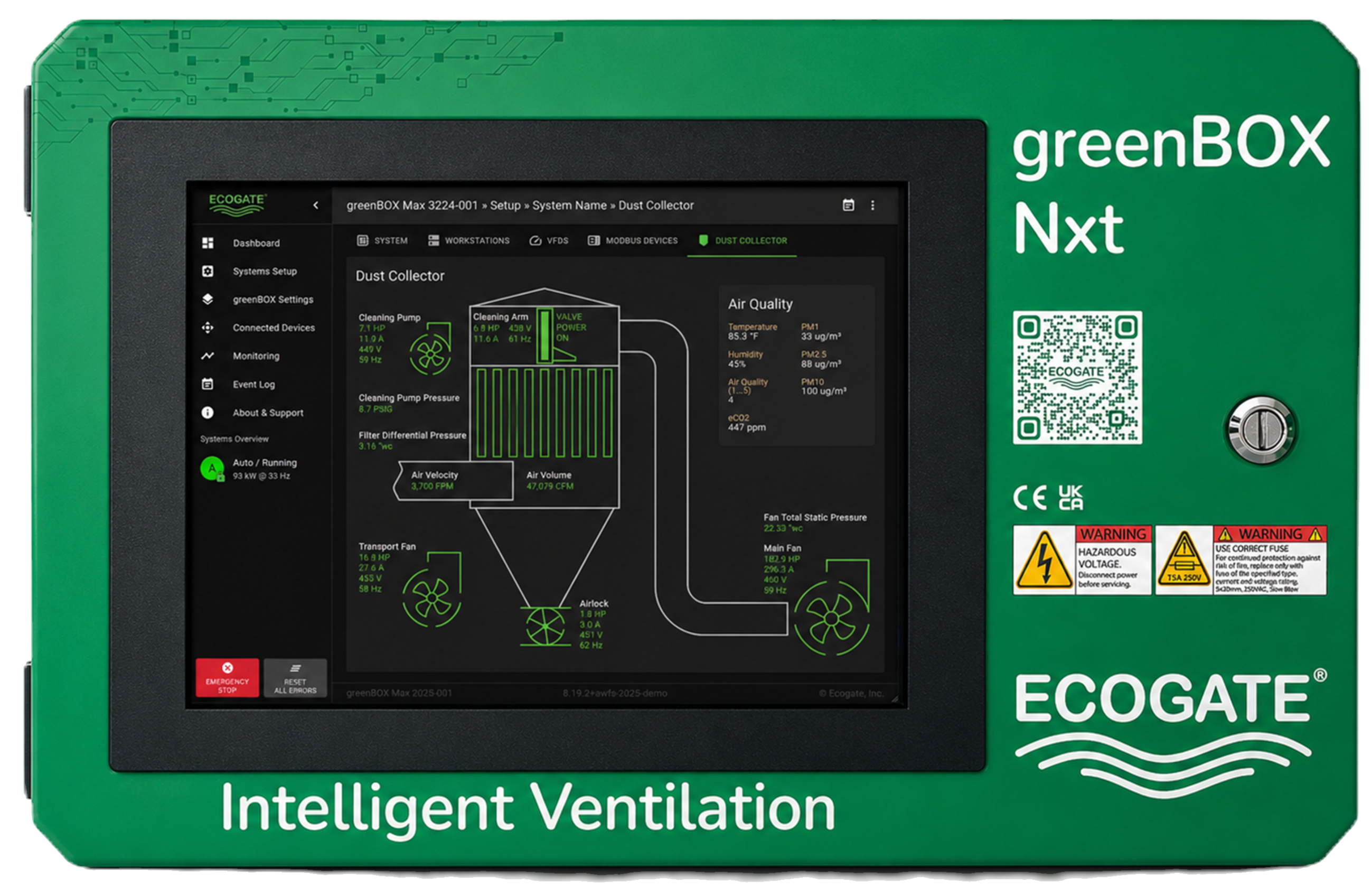
The greenBOX coordinates active process points and calculates the airflow required by the configured system and duct zones.
Precision Airflow Gates can modulate dedicated bleed air as process demand changes.
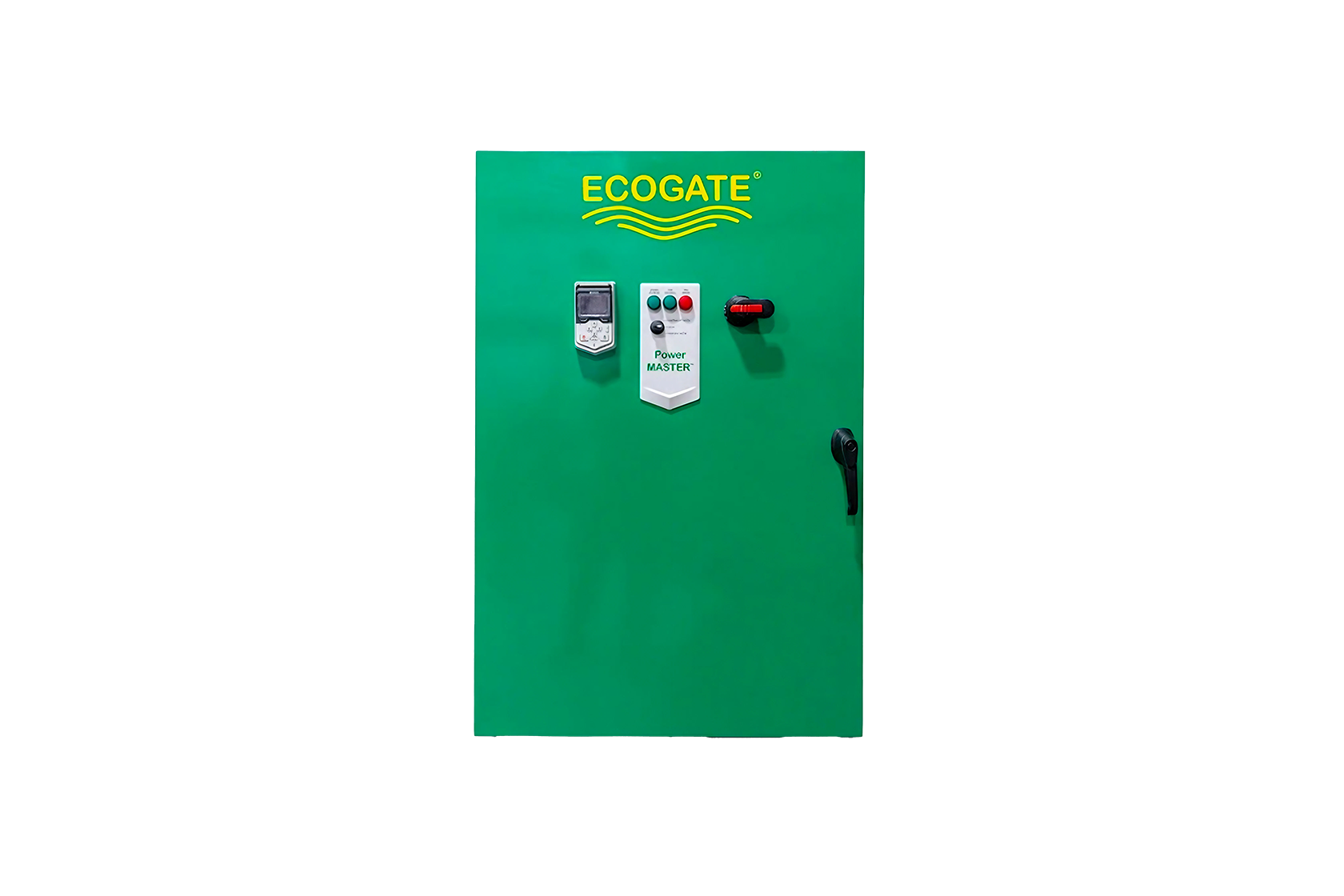
The Power Master VFD adjusts fan speed to match the current operating condition.
Current Smart Systems using the greenBOX support automatic airflow calibration at gate, branch and system levels, with dynamic minimum-velocity control across as many as 10 configured duct zones.
Each system is configured around the facility’s process points, required airflow values and operating sequence.
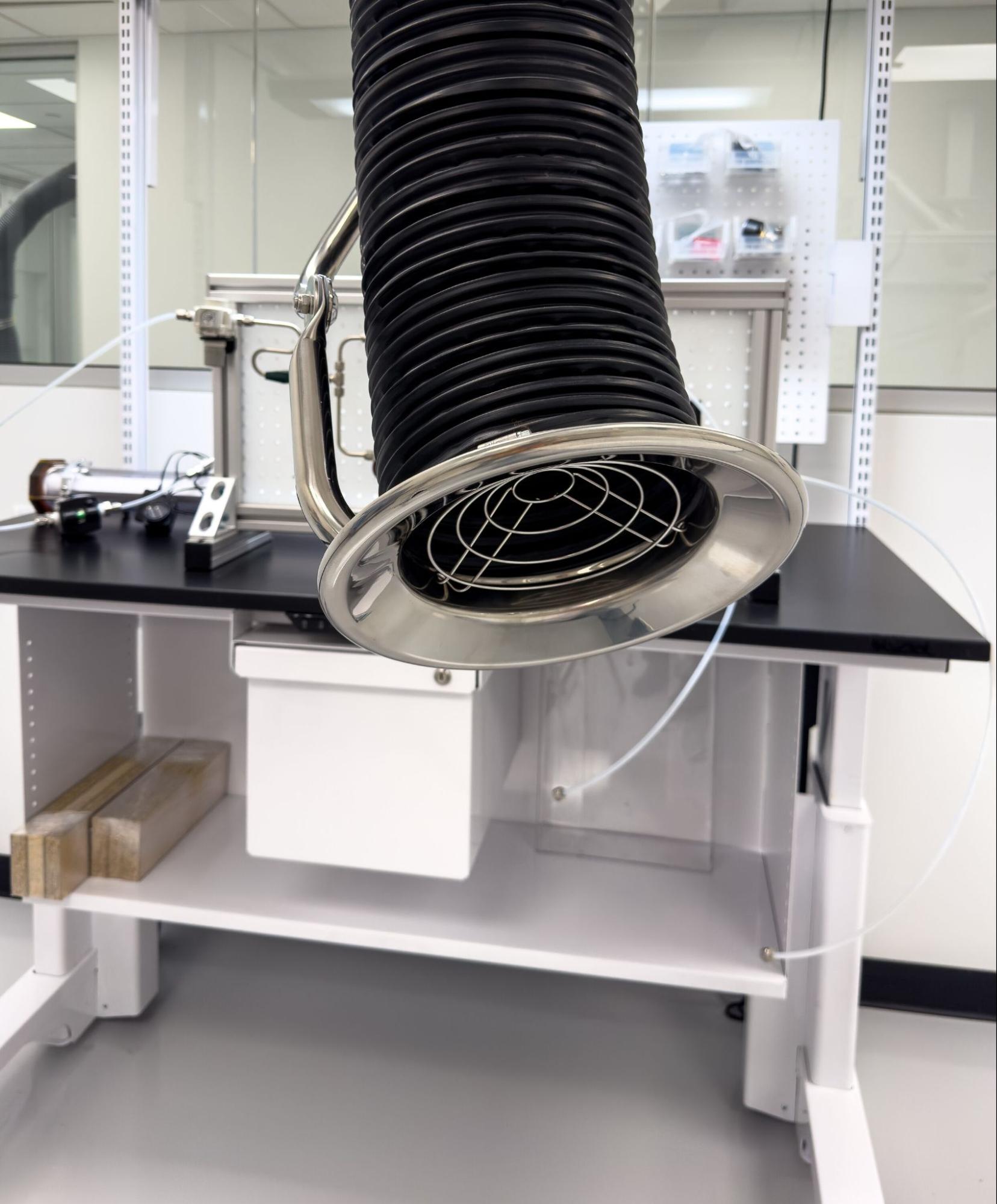
See how movable extraction arms, wall-switch controls, Butterfly Smart Gates and Precision Airflow Gates configured for dedicated bleed airflow work together in Svante’s R&D laboratory.
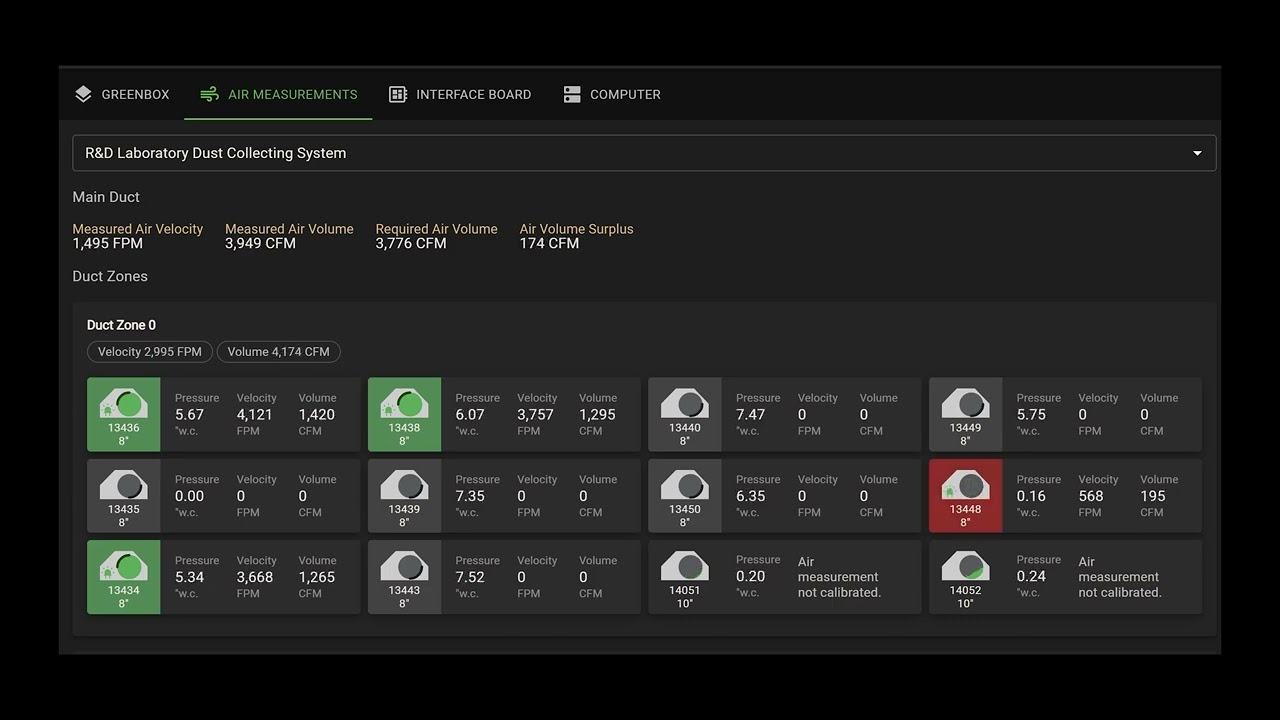
Watch active extraction points, localized controls and dedicated bleed airflow operate in a variable-demand laboratory environment.
 ▶
▶Application engineering starts with each process point, its required airflow and the expected operating sequence.
Share the process schedule, airflow requirements and control architecture for an initial engineering review.
Ecogate components communicate using Modbus RS485 RTU. Integration with a facility PLC or higher-level control platform is defined during controls engineering.
Available data points, commands, protocol conversion and responsibility boundaries are established during project controls engineering.
Current Adelie-generation systems store operating data locally in a time-series database and make it available through the built-in web interface. Local monitoring does not require cloud connectivity. Remote communications are end-to-end encrypted and do not require open inbound internet ports.
Explore the technologies, control strategies and engineering principles behind on-demand airflow control for pharmaceutical production.
Detailed explanation of make-up air, dedicated bleed gates and variable operating demand.
Central vacuumRoom-valve inputs, pump control and transport-airflow management for central vacuum applications.
Airflow controlVariable-position gates for measured airflow control and dedicated bleed applications.
Selection guideHow rotating-blade and butterfly bodies, materials and actuator types differ.
IntegrationHow Ecogate participates in higher-level automation and operating-data workflows.
Operating logicSensor logic, minimum-airflow strategies and configurable response behavior.
The greenBOX calculates airflow demand as extraction points open and close. If active process points do not provide the airflow required by the engineered duct strategy, designated Precision Airflow Gates can add bleed air from an appropriate plenum or technical space. Minimum transport-velocity values are established during system engineering and commissioning.
In a pharmaceutical or laboratory environment, opening an inactive point may remove additional conditioned room air, disturb room conditions, create noise or interfere with a process. Dedicated bleed gates provide a separate source of transport air when the system design calls for it.
Ecogate components use Modbus RS485 RTU communication. Integration with a facility PLC or higher-level control system can be established during project controls engineering. The available points, commands, protocol conversion and responsibility boundaries depend on the project configuration.
Current Adelie-generation systems can display and store gate airflow information, fan and filter pressure, VFD power consumption, system utilization and configured warnings or alarms. Data is stored locally, with CSV downloads available for operational and engineering analysis.
Yes. Ecogate offers stainless-steel gate-body options and butterfly-style bodies for appropriate low-particulate and seal-sensitive applications. Final material, body and actuator selection depends on the process and system conditions.
Potentially. Ecogate can evaluate existing ductwork, collection points, fans, drives, control signals and transport-airflow requirements to determine whether an on-demand retrofit is technically appropriate.
Ecogate has experience with on-demand central vacuum applications using room-valve or process inputs, automatic pump operation and minimum-airflow control. The pump, valves, pressure range and control sequence require project-specific review.
Ecogate controls extraction-point operation, gate coordination, measured airflow inputs, dedicated bleed-gate position and fan-speed demand, and it can communicate configured operating information. Capture design, ductwork, filtration, room-pressure design, material hazards, containment and explosion protection are addressed by the complete engineered system. GMP qualification, validation, operating procedures, maintenance, change control and regulatory compliance remain facility responsibilities.
Useful starting information includes a process and collection-point list, operating schedule, simultaneous-use assumptions, duct drawings, required airflow values, fan and collector data, room-pressure requirements, control-platform details and applicable dust or material hazards.
Share the process points, simultaneous-use assumptions, design airflow values, current extraction equipment and facility-control requirements. Ecogate can help determine where on-demand airflow control may fit.
Useful starting information: process-point schedule, duct drawings, airflow requirements, fan and collector data, room-pressure requirements, control-platform details and applicable material hazards.