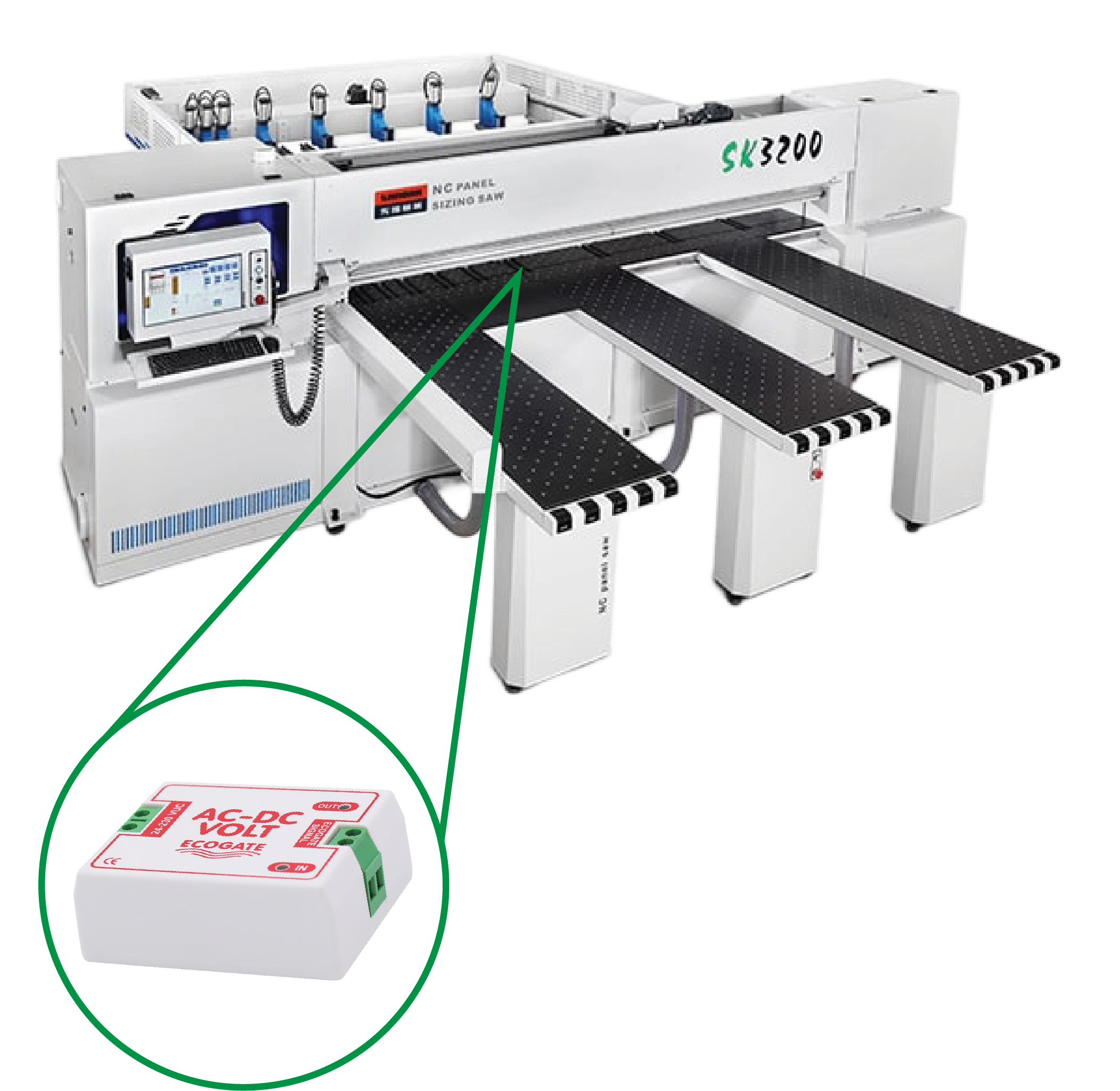
Detect demand
Activity sensors or operator controls identify when a workstation requires ventilation.
Explore activity sensorsReduce operating costs, support required airflow, and create a quieter environment for instruction in woodworking labs, welding schools, fabrication studios, and makerspaces.
Ecogate matches workshop ventilation to actual workstation demand. The system directs airflow to active work areas, adjusts fan speed as demand changes, and helps a properly designed, installed, and calibrated system maintain required minimum transport velocities.
Project results depend on the fan, ductwork, schedule, utilization, electricity rate, make-up air, and installed configuration.

Students move between demonstrations, setup, active work, cleanup, and discussion. Ecogate responds to that changing pattern instead of treating every machine or booth as continuously active.
Ecogate is more than a VFD or a set of automatic gates. The sensing, airflow control, calculation, fan regulation, and reporting layers work together.
Activity sensors or operator controls identify when a workstation requires ventilation.
Explore activity sensors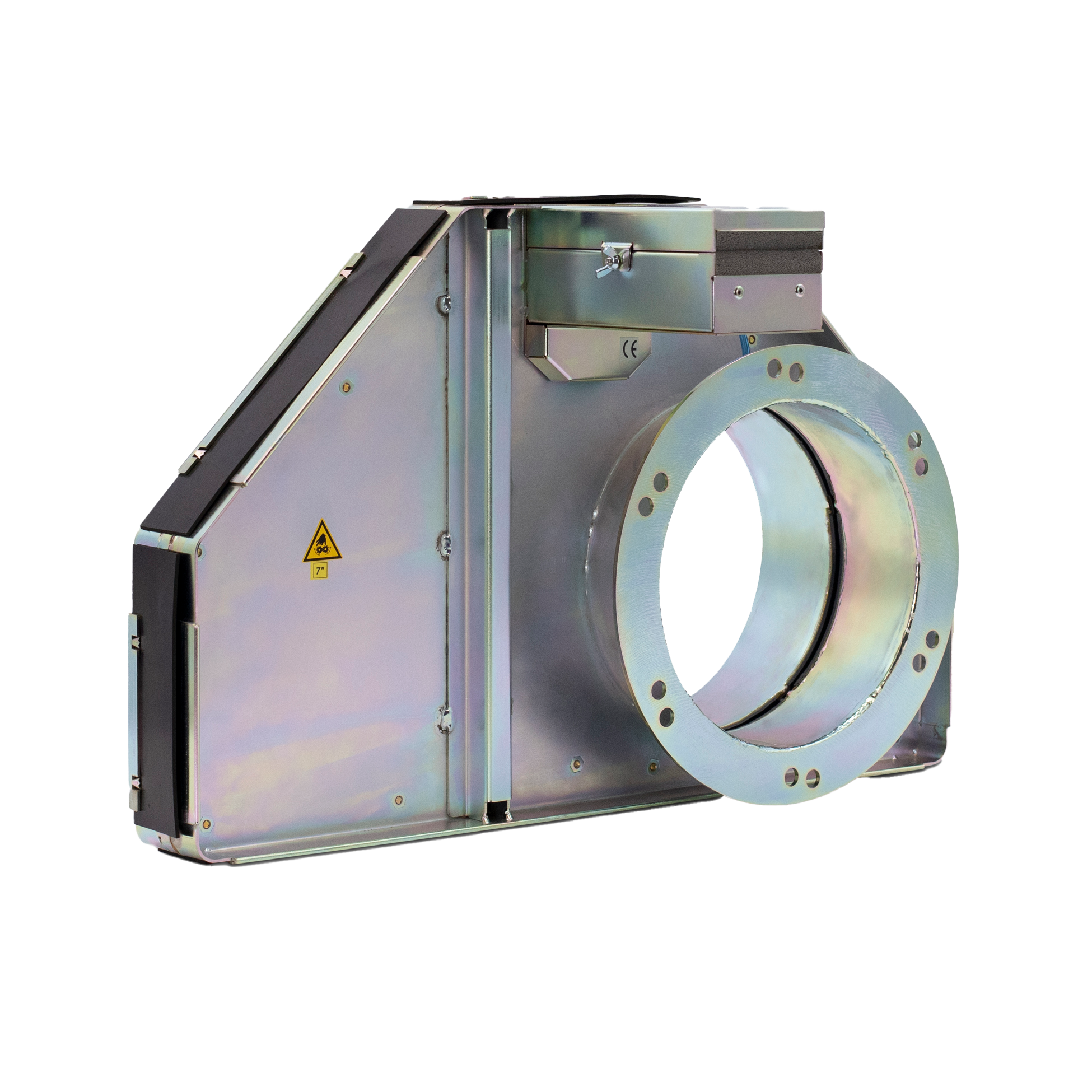
The corresponding automatic gate opens. Smart Gates can also measure pressure, velocity, and air volume.
Explore automatic gates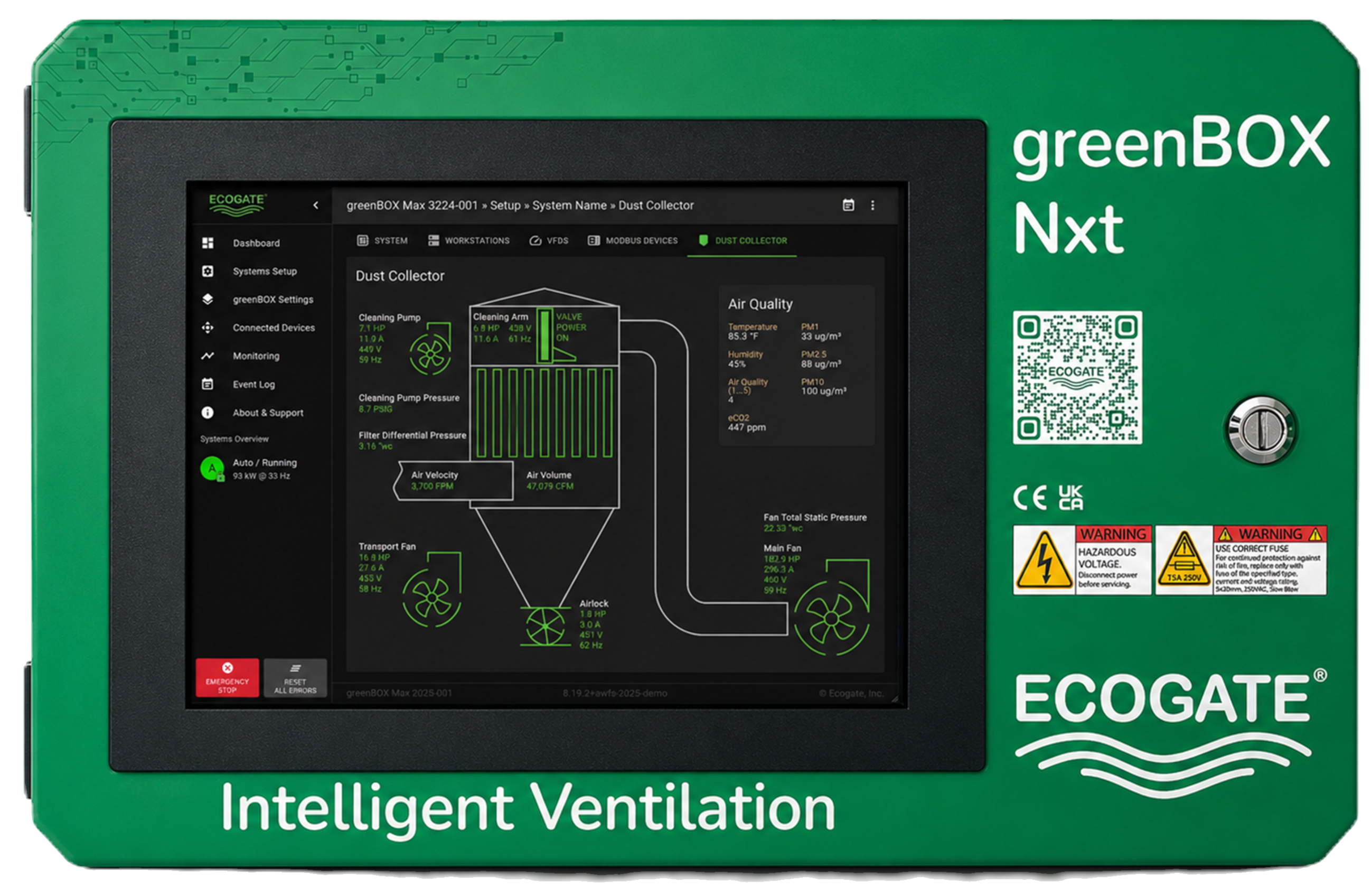
The greenBOX continuously calculates active workstation demand and the configured minimum transport velocity.
Explore the greenBOX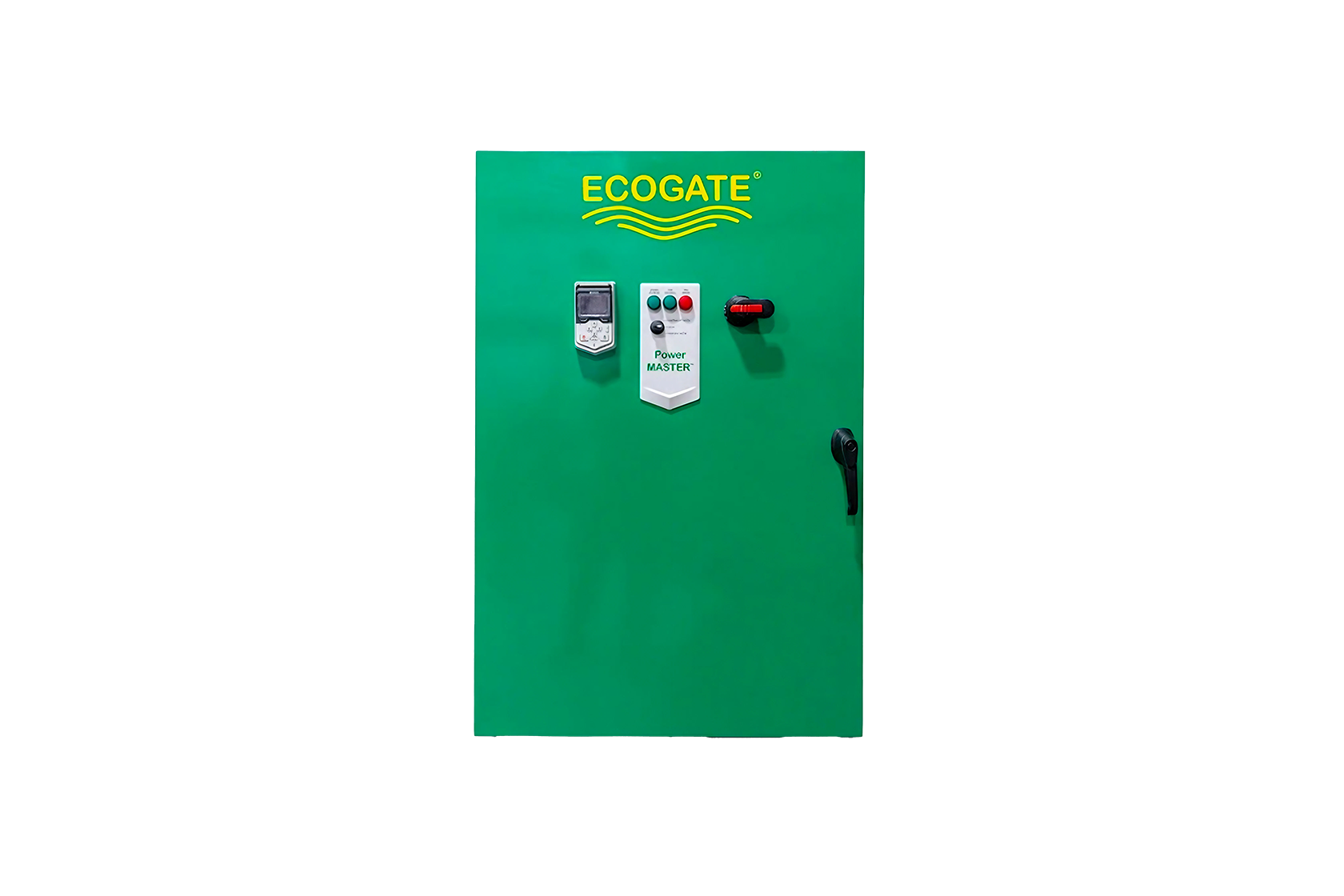
The Power Master VFD matches fan speed to the calculated requirement within the engineered operating range.
Explore Power Master VFD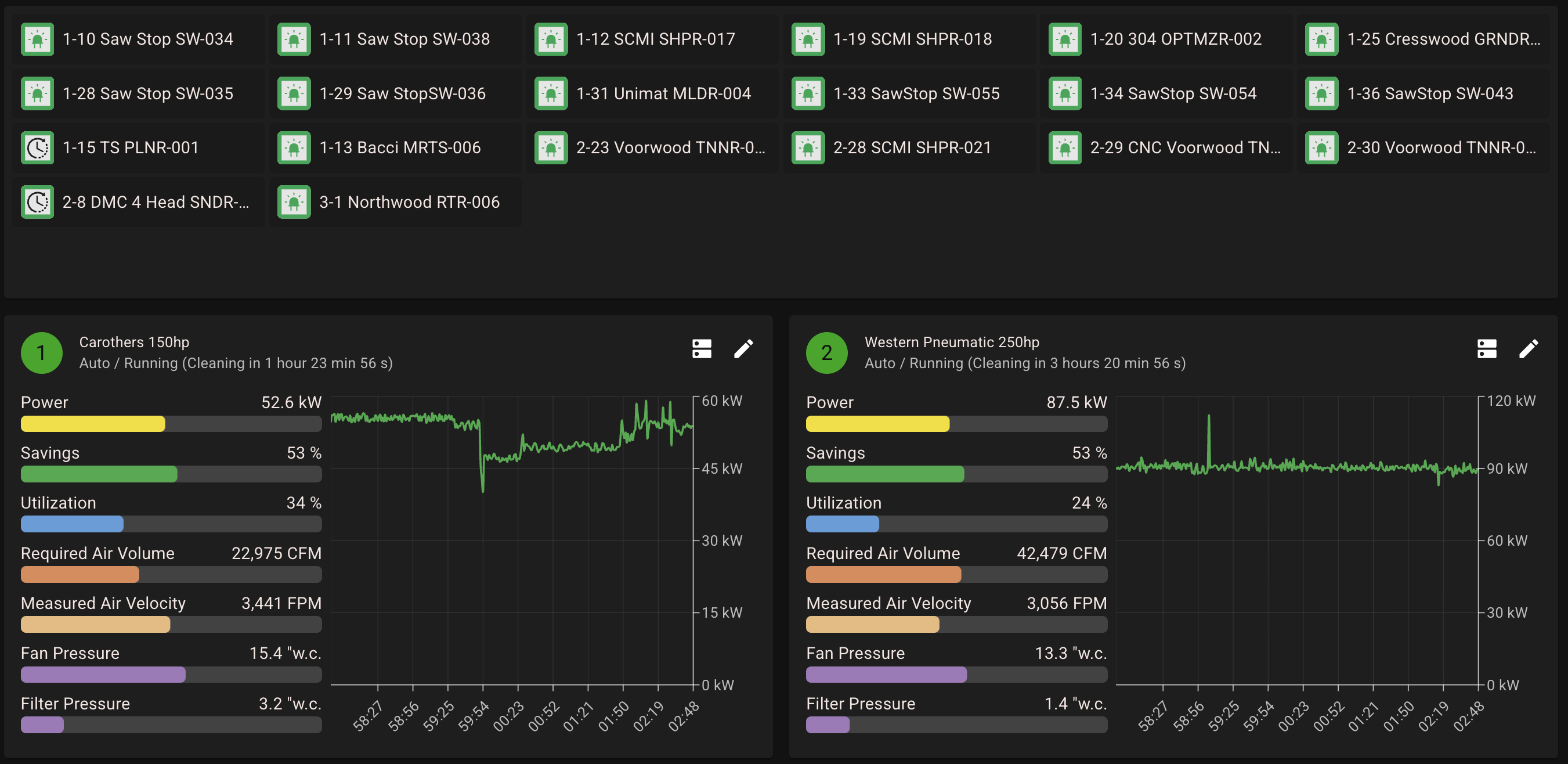
Analytics can make fan power, airflow, pressure, utilization, events, and calculated savings available for review.
Explore Ecogate AnalyticsFacilities, instructors, engineers, finance teams, and sustainability leaders see different parts of the same opportunity.
Across applicable installations, Ecogate customers average about 66% savings in dust collection fan electricity. Every school requires a project-specific estimate.
New systems can be evaluated around realistic peak demand, required transport velocities, pressure losses, and future growth. Right-sizing means engineering for verified requirements, not undersizing.
When demand falls, lower air volume and fan speed can reduce mechanical noise during demonstrations, reviews, and conversations.
Reducing unnecessary exhaust volume may reduce the energy required to heat or cool replacement air, depending on the building and ventilation design.
System data can document fan energy use, support maintenance, reveal workstation utilization, and inform future equipment decisions.
Workstation moves and additions can be accommodated when the system is reviewed, configured, and recalibrated for the new conditions.

“Once we established the criteria, Ecogate was a no-brainer.”
Bradley Matthews, Project Manager, Lead Installer, and Board Member, Nova LabsNova Labs needed an engineered dust collection system for a larger nonprofit makerspace. The jurisdiction required stamped plans, while turnkey proposals approached $1 million.
Ecogate engineered the system around realistic simultaneous use and required conveying velocities, reducing the proposed main duct from 24 inches to 14 inches. Ecogate also provided stamped drawings and participated in discussions with city reviewers.
The cost and duct comparison is specific to Nova Labs and reflects its scope, extensive volunteer labor, and self-installation model. It is not a universal project price.
Read the Nova Labs case studyEach project demonstrates a different reason to use on-demand control: energy, wide-ranging demand, instructional noise, or long-term operation.

Compared with the conventional system evaluated for the project, documented fan electricity savings were 96% with one active booth, 85% with 10, 72% with 20, and 61% with 30.
The system also connects with Honeywell Tridium building automation for monitoring and make-up-air adjustment.
See the project
A 75 HP Power Master VFD adjusts fan speed to real-time demand. Utilization reporting also supports maintenance decisions and Lean Manufacturing discussions.
“The machine utilization report is really cool. It can inform decisions such as where to focus preventative maintenance.”See the project

Students commonly use only one or two of approximately 15 machines during class. Ecogate redirects airflow and regulates the 30 HP fan as demand changes.
“The Ecogate system has improved our overall ability to mitigate the dust created in our busy academic environment while reducing mechanical noise to better allow instruction.”See the project

NYU Steinhardt's shop includes woodworking, metalworking, welding, sanding, and other fabrication equipment. Ecogate provides collection when machines are active and automatically shuts down the collection system when no connected workstation requires it.
See the projectThe first engineering questions are different, but both paths start with actual equipment, airflow, operating schedules, and future plans.
Bringing Ecogate into the project early can help the design team evaluate simultaneous use before collector, fan, duct, make-up-air, and control decisions are fixed.
Many existing systems can be upgraded with Ecogate controls, automatic gates, sensors, and variable-speed fan control after an engineering review confirms suitability.
Equipment, plans, schedules, utilities, and project goals.
Airflow requirements, system scope, controls, and economics.
Customer, contractor, dealer, or Ecogate-supported installation.
Verify gate operation, fan response, airflow settings, and training.
Smaller systems are often customer-installed with documentation and training. Larger Smart Systems generally benefit from Ecogate or dealer installation and commissioning support.
These answers define where Ecogate fits, what engineering must verify, and what information helps start a useful review.
Ecogate can control dust, fume, or mist collection in woodworking and cabinetmaking labs, welding schools, metalworking shops, architecture and fabrication studios, sculpture shops, technical education centers, and makerspaces. Every application requires engineering appropriate to its materials, equipment, hoods, ductwork, collector, and operating requirements.
Often, yes. Ecogate can be added to many existing systems if the fan, motor, collector, ductwork, and overall condition are suitable. An engineering review determines what can remain, what should change, and the expected savings opportunity.
A useful preliminary benchmark is Ecogate's average reduction of about 66% in dust collection fan electricity across applicable installations. Actual savings depend on fan horsepower, schedules, operating hours, simultaneous use, electricity rates, duct condition, and make-up air. Madison Area Technical College reports approximately 80% fewer kWh than a conventional system serving its 36 workstations.
Ecogate does not simply close gates and reduce fan speed. The greenBOX calculates the air volume required by active workstations and the configured minimum transport velocity. When necessary, it opens additional gates at selected inactive workstations or within duct zones so the system maintains required airflow while avoiding unnecessary excess volume.
Ecogate is the airflow-control layer within a complete system. In a properly designed, installed, and calibrated system, Ecogate is designed to fulfill the relevant NFPA 660 control-system requirement by maintaining required minimum transport velocities as gates operate. Full facility compliance includes broader design, hazard analysis, protection, installation, housekeeping, procedures, and AHJ requirements.
Project-specific engineering and stamped drawings are available when required. Ecogate can participate in technical discussions with project engineers, building officials, fire marshals, and other reviewers. Final requirements and approval remain with the project's design professionals and Authority Having Jurisdiction.
Installation options depend on system size and available expertise. Smaller systems are often installed by customers using Ecogate manuals, videos, and training. Larger systems generally benefit from Ecogate or dealer support for installation, commissioning, measurement, setup, and calibration. Licensed contractors should perform work where required.
Integration is available for suitable projects. Portland Community College's system connects to Honeywell Tridium building automation for monitoring, energy evaluation, measured exhaust air volume, and make-up-air adjustment. Integration scope and data points should be defined during engineering.
Useful starting information includes a floor plan, workstation list, duct diameters, collector and fan information, motor horsepower and voltage, schedule, estimated simultaneous use, utility rate, make-up-air details, planned additions, and known permitting or code requirements.
Share your equipment list, collector information, class schedule, and project plans. Ecogate can review the system and identify the most useful next step.
No universal savings or project-cost assumptions. Recommendations are based on your facility, equipment, operating pattern, and engineering requirements.
If the form does not load, open the Ecogate contact page.